

























Here in Mobile, we proudly tout the (valid) bragging right as the home of Mardi Gras in the U.S. Although the Baachus and Endymien parades of the Big Easy trump ours in size, we enjoy dragon floats and wonderful shows from our own local bands.
We all know that this tradition descends from the French settlers, but not many people know the widespread global season of Carnival. In fact, the tradition spans three (or four, in some contexts) continents, and each celebration has its own local flavor depending on the regional celebration. Some of the most famous iterations of the Carnival season are those in Rio de Janeiro, Venice, and even some Caribbean island nations, such as Aruba (who celebrates in the summertime), Trinidad and Tobago, and more.
Rio
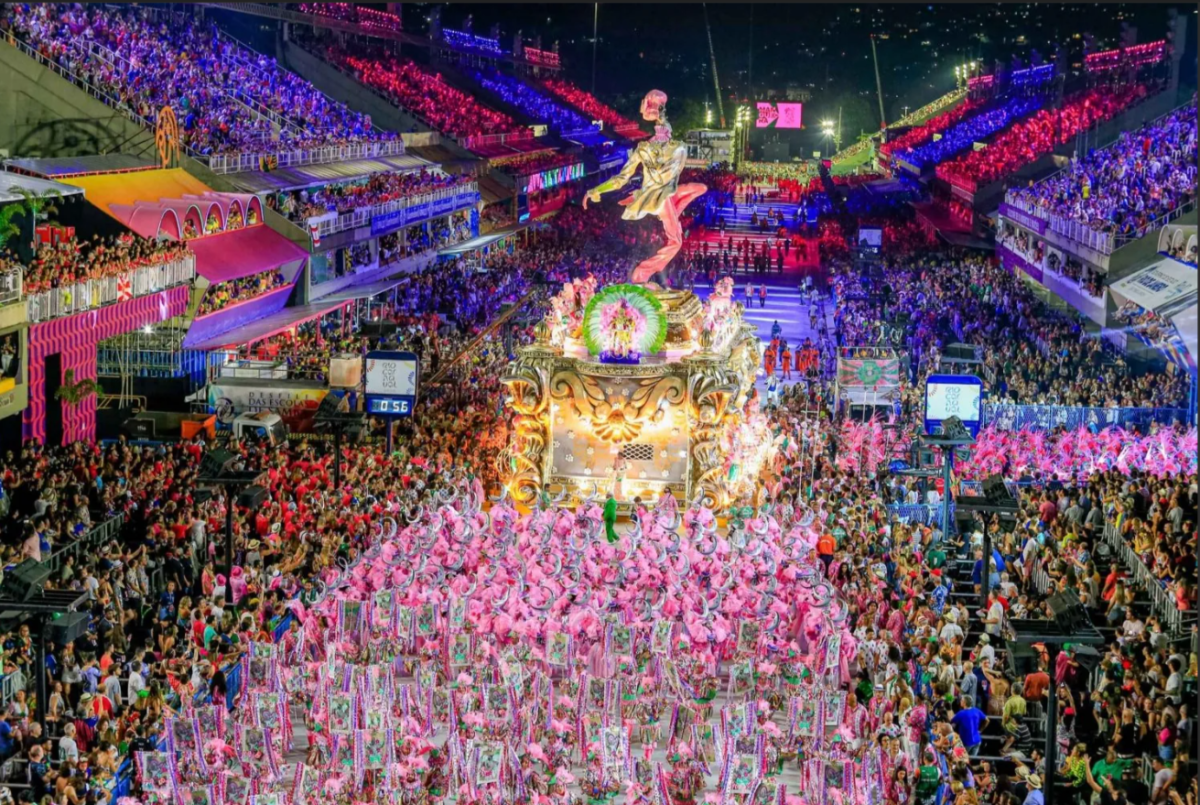
In addition to being the world’s largest carnival, the festival mixes African, Portuegese, and indigenous traditions. Residents and tourists alike gather in the streets for parties known as “blocos.” Translating to “block” in English, these parties each have unique themes, and are a host to music, parades, and tons of fun. Personally, my favorite thing about the Rio Carnival is the vibrant color. Everywhere you look, there are flamboyant costumes with ornate details and LOTS of color.
Venice
Take it in: the whisper of the undulating waves is unheard over the roar of people, cameras flashing as men and women in ornate, elaborate masked costumes dance around the city, in particular, the Piazza de San Marco. Intense parties fill the halls of Venice as debauchers prepare for the season of Lent. The masquerade balls of Venice are notorious and famous amongst tourists and Italians alike.
Trinidad
On the island of Trinidad (as opposed to the other island in the nation’s namesake, Tobago), the lively community hosts a melting pot of cultures to simmer into a beautiful carnival! I’m going to focus on the music for this one, as that is where it stands out. Calypso is an African-sounding genre of music originating from the Caribbean nation, brought over by slaves, and is prevalent in the Carnival season. Additionally, the festival hosts a competition called “Panorama,” which is a competition between steel drum players during the Carnival season. Finally, the islands are home to an extremely unique form of music known as “chutney.” The genre was created by the mixing of Caribbean music traditions with those of Indian indentured servants, gaining popularity in the middle of the last century, and often features call-and–response style lyrics.
Uruguay
Ending with the longest carnival in the world, Uruguay’s 40-day-long celebration (late January to early March), has performances of Afro-Uruguayan music, particularly in a style known as “Candombe,” in addition to “Murga,” a satirical form of musical theatre that originates from Cadiz, Spain. Each group performing “Murga” has 17 members! In fact, a characteristic aspect of this carnival is that of theatre. Much of the celebrations in the festival have to do with satire and humorous performances.
In conclusion, the world has so much to offer through the Carnival season. I hope that I get to experience these in person in the future.