




























 Who are some of our hometown heroes? We may come to think of doctors, veterans, and law enforcement, but what about the four-legged heroes? Although many see them in action, not too many have insider details as to what exactly they do. They patrol the streets during Mardi Gras parades, detect bombs, and work around the clock to ensure our safety, but who are they? They are the Mobile Police Department Canine unit. They have five separate task groups overall, including a separate unit used for explosion detection, where they work at large events such as South Alabama Football games, as well as in-port cruise ships, this group is on the ground, ensuring the safety of attendees and cruisers alike. This group often works with the local SWAT team to aid the United States Marshall Service with high- risk search and warrant arrests.
However, another unit that they work in is drug search.
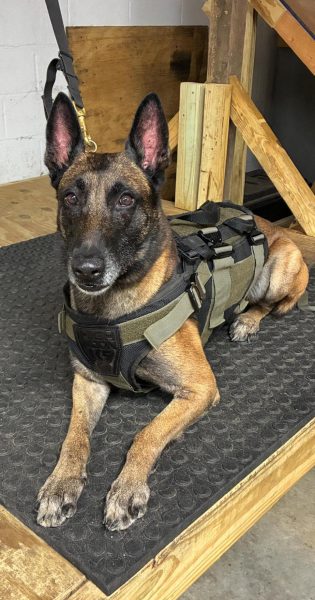
An example of this is MPD service dog, Gunner. Gunner will be 10 years old in June and is a dual-purpose narcotic and apprehensive canine. This means that his day-to-day asks vary. They can range from search warrants to assisting patrol. He is on call 24-7 and typically has the ability to train most days with the agency. I have had the wonderful opportunity to interact and watch a demonstration with Gunner, which has been documented in video form. Demonstrations such as these can be used to better educate the community on how these furry heroes serve our community every day.
I was also able to ask Gunner’s handler, Josh, a few questions.
When asked what he had to do in order to become a canine handler, the officer said that he had to go through a PT test, interview, and a hands-on familiarization with the dogs. It is necessary to be self-motivated, willing to learn, be able to work with others, and make decisions on your own.
Josh says, “I enjoy working in canine because when you train a dog from the ground up and you start having success with them, to me there is nothing more satisfying, all the hard work that you put into it is paying off.”
Additionally, Josh says that one of the coolest things that Gunner can do is transition from searching for a bad guy hiding in the woods or a house, then go straight to searching for drugs or a firearm.
When the heroes are not working, (in most cases) they live with their handlers. The officers ensure the wellbeing of the dogs, forming a strong bond that is useful during events requiring teamwork. The officers also train the animals informally at home, keeping them active and going through practice sessions for their specific fields. According to Josh, an MPD canine officer, they train the dogs on a daily basis, even if it’s only short obedience sessions.
“You have to keep switching it up,” Josh says. “Detection, tracking, obedience, article searches, building searches, and area searches. The training needs to be consistent.”
Typically, after 8-10 years, the canines are retired and live with their handlers or are adopted by their families. In an event where they cannot be adopted, the department will find a home for them among approved civilians or among the canine department community. Bits of federal legislation and non-profit agencies work to provide coverage for vet bills after the dogs have been retired.